
Compare Building Quotes
How to Compare Building Quotes Fairly
Two building quotes can show very different totals while describing projects that appear almost identical.
The difference is not always that one builder is simply more expensive. One quotation may include items, finishes or allowances that another leaves out, treats differently or has not yet been able to price accurately.
Learning how to compare building quotes means looking beyond the final figure and checking whether you are actually comparing the same scope of work.
Start With the Same Plans and Specifications
A fair comparison starts with giving each builder substantially the same information.
That means the same plans, specifications, intended finishes, site information and project requirements wherever possible. If one builder prices detailed drawings and another receives only a rough concept, the resulting figures are not directly comparable.
Consumer Affairs Victoria recommends comparing at least three written quotes for the same plans and specifications. It also advises homeowners to clearly define the desired features, fixtures, fittings and finishes to help builders prepare more accurate quotations.
Before comparing totals, ask yourself: Did each builder price the same project?
If the answer is unclear, start there.
Compare What Is Actually Included
Work through each quotation section by section rather than jumping straight to the total.
Look for the major elements of the proposed work and check whether they appear consistently across the quotes. Depending on the project, this might include site preparation, structural work, materials, fixtures, finishes and other agreed construction requirements.
Also look at what is specifically excluded.
An exclusion is not automatically a problem. In fact, clearly stated exclusions can make a quotation easier to understand. The important thing is knowing what you may need to arrange or pay for separately.
A useful building quote comparison should therefore consider three questions:
- What is included?
- What is excluded?
- What has not yet been fully determined?
Those answers often explain more than the total alone.
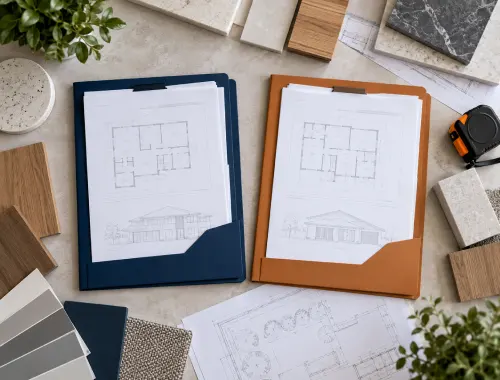
Look Closely at Fixtures and Finishes
Selections can significantly change what two apparently similar quotations represent.
A quote based on one level of flooring, appliances, cabinetry, tiles or tapware should not automatically be compared with another quote based on different selections.
Where possible, check whether products are clearly identified by type, make, model or an appropriate specification. Consumer Affairs Victoria recommends recording specific fittings, fixtures and finishes in building contracts and identifying responsibility for supplying them.
If exact products have not yet been chosen, ask how the quote deals with those undecided items.
That is particularly important when allowances are involved.
Understand Prime Cost Items and Provisional Sums
Some costs cannot always be finalised when the initial documents are prepared.
In Victorian domestic building contracts, prime cost items generally relate to fixtures and fittings that are included but have not yet been specifically selected and costed. Provisional sums relate to work for which the exact price is not known when the contract is signed.
The distinction matters because the final cost can differ from the allowance.
Consumer Affairs Victoria advises that contracts identify these items and provide relevant cost estimates. It also notes that changes involving prime cost items, provisional sums and agreed variations can affect the stated contract price.
When comparing builder quotes, therefore, do not treat every allowance as though it were a confirmed final cost.
Ask what the allowance is intended to cover and whether it is realistic for the quality or specification you expect.
Check What Sits Outside the Construction Quote
Another important question is whether there are project costs that sit outside the builder’s quoted construction scope.
Depending on the project, design, drafting, engineering, surveying, permits, specialist consultants and other pre-construction requirements may involve separate work or fees.
The SB Custom Homes project information follows this same principle: initial quotations are based on the agreed scope and relevant project requirements, while design, planning, engineering, surveying, permits, consultants and other pre-construction requirements may involve separate fees.
Do not assume that a lower construction figure includes every professional or approval-related cost required to get the project underway.
Instead, ask each builder to clarify which items their quotation includes and which will be determined separately.
Ask What Could Change the Price Later
A quotation gives you much more useful information when you understand what assumptions sit behind it.
Changes to plans, specifications or selections after agreements are made can affect cost and timing. Victorian guidance requires certain contract variations to be documented, and Consumer Affairs Victoria recommends putting agreed changes in writing to reduce the risk of disputes.
Before choosing between quotations, ask questions such as:
What parts of this quote are fixed based on the current information?
Which items are allowances?
Are there selections I still need to make?
Could further site information affect the scope?
Which costs are specifically excluded?
What happens if I change a material, fixture or design detail later?
Clear answers can be more valuable than a quote that simply presents one large number.
Compare Communication as Well as Cost
A quotation is also an early indication of how clearly a builder communicates.
Is the scope understandable? Are assumptions explained? Can you see what is included and excluded? Does the builder answer questions directly?
Consumer Affairs Victoria advises considering not only price but also whether the builder is likely to listen to your requirements, communicate clearly and provide regular updates.
This does not mean automatically choosing the most detailed document or the highest quotation. It means considering whether you understand what you are being offered well enough to make an informed decision.
Build a Simple Quote Comparison Checklist
Before deciding, put the quotations side by side and compare the same categories.
Check the plans and specifications used, overall scope, inclusions, exclusions, fixture and finish assumptions, allowances, pre-construction costs and any items that remain unresolved.
Highlight differences rather than immediately deciding which version is better.
One builder may have included something another has excluded. Another may have allowed more for a selection you consider important. A third may need additional information before providing a firmer figure.
Once those differences are visible, the totals become much easier to interpret.
Compare Like With Like Before You Decide
The goal of comparing quotes is not to find the smallest number on the page. It is to understand what each builder proposes to deliver for that number.
Clear plans, detailed project information and well-defined selections give you a stronger basis for comparison and better questions to ask before proceeding.
For a suitable project in Pakenham or another confirmed SB Custom Homes service area, you can provide your project type, site location, available plans or drawings, requirements and preferred finishes when making an enquiry. SB Custom Homes offers free initial quotations for suitable projects, with a site visit potentially recommended or required where more information is needed for an accurate quotation.